Anion Gap Calculator for Acid-Base Assessment
Understanding the Anion Gap?
The anion gap is a practical way to look at the equilibrium of ions in the blood. It is based on standard electrolytes measured on a simple lab test, especially sodium, chloride, and bicarbonate. Because routine testing does not measure every charged particle directly, the anion gap serves as an approximate estimate of the discrepancy between measured cations and measured anions.
In practical terms, the anion gap helps clinicians assess acid-base balance and look for hidden acids or other causes of a metabolic disorder. It is often used as a diagnostic tool during laboratory interpretation of serum electrolytes, especially when a patient’s chemistry panel suggests metabolic acidosis.
The concept shows an electrochemical difference in anion concentration. Since not all unmeasured ions are included in routine testing, the gap can hint at what is happening beyond the standard panel. A higher-than-expected value often points to extra acids in the blood, while a lower value may suggest less common issues such as protein changes or lab variation.
An electrolyte panel or broader serum chemistry panel usually provides the values used for this estimate. That is why the anion gap is widely used in clinical evaluation and patient assessment: it offers fast insight into possible metabolic acidosis causes without requiring specialized testing first.
How the Anion Gap Calculator Works
An anion gap calculator completes the anion gap calculation instantly with values from serum chemistry. The traditional anion gap formula is:
anion gap = sodium - (chloride + bicarbonate)Some methods of the calculation may include potassium, but most clinical use relies on the simpler form above. The calculator is designed to make the calculation quick and minimize arithmetic mistakes when reviewing lab results.
To use the tool, you provide the measured sodium, chloride, and serum bicarbonate values from the lab report. The calculator then deducts the sum of chloride and bicarbonate from sodium and shows the result. Because the inputs come directly from standard electrolytes, the result is straightforward to connect to the patient’s serum bicarbonate level and the broader acid-base picture.
This kind of lab result analysis is especially useful when trying to differentiate routine abnormalities from patterns that suggest a more serious disorder. The anion gap does not provide a diagnosis by itself, but it helps frame the differential diagnosis and helps with next steps in test interpretation. In many cases, it is one of the first numbers reviewed after a chemistry panel is available.
The calculator is also useful because it standardizes anion gap calculation across different settings. Even when the basic formula is the same, different laboratories may have slightly different methods, assays, or reference range values. A calculator helps place the number in context rather than treating it as a standalone answer.
Interpreting High Anion Gap Results
A high anion gap usually indicates metabolic acidosis, especially when the bicarbonate level is low. In this setting, the body has accumulated acids or depleted base, and the gap increases because those excess acids are not directly measured in the standard panel.
Assessing the result depends on the expected range used by the lab and the rest of the lab values. A mildly elevated number may be less concerning if there is a clear explanation, while a clearly abnormal result often requires a more careful review of the patient’s history, symptoms, and other labs. The same value can mean different things depending on the clinical situation.
It helps to think of the anion gap as a clue rather than a diagnosis. A high value supports the presence of an acid load from one of several sources, but it does not identify the exact cause. That is why the result should be paired with the rest of the chemistry panel, and often with a blood gas if the acid-base status is not fully clear.
Main considerations for interpretation include:
- Increased anion gap with low bicarbonate often supports metabolic acidosis.
- A normal value does not rule out all acid-base problems; it may indicate a normal anion gap process instead.
- Changes in albumin can alter the apparent gap and affect comparison to the lab’s normal range.
- Timing matters, because acid-base patterns can shift quickly during illness or treatment.
In real-world medical evaluation, the result should be read alongside symptoms, medication history, kidney function, and the full chemistry profile. The calculator is a practical entry point, but it is only one part of careful patient evaluation.
Frequent Causes of a raised anion gap
The most common causes of a raised anion gap are conditions that increase acid production or impair acid removal. Classic categories include lactic acidosis, ketoacidosis, renal failure, and contact to certain toxins. Each one leads to buildup of acids or unmeasured anions, which widens the gap.
Lactic acidosis happens when lactate accumulates faster than the body can clear it. This can happen during poor tissue oxygen delivery, severe infection, shock, or other states of stress. Because lactate is an unmeasured anion in standard labs, the anion gap often rises.
Ketoacidosis is another major cause. It may occur when the body metabolizes fat rapidly and generates acidic ketones. This is often seen in uncontrolled diabetes, but it can also occur with prolonged fasting, heavy alcohol use, or other metabolic states. The calculator can help spot this pattern early when bicarbonate is falling and the gap is increasing.
Renal failure can also lead to a high gap because the kidneys are less able to remove acids. As acid retention progresses, the chemistry panel may show multiple abnormalities. The anion gap may help differentiate advanced kidney-related acid buildup from other forms of acidosis.
Toxins are another important category. Certain ingestions or exposures can cause a significant acid-base disturbance, often with a rising anion gap. In these situations, the calculator can warn clinicians to a serious metabolic process that needs https://anion-gap-review672.lumenforgex.com/posts/how-to-use-an-anion-gap-calculator-in-metabolic-panel-interpretation prompt evaluation.
Other rarer causes may exist, but these four categories cover many of the most important metabolic acidosis causes. The key point is that a high value should trigger a broader search for the source of excess acid rather than being interpreted in isolation.
Corrected Anion Gap and Albumin Correction
One key of the most important points in anion gap interpretation is the effect of albumin. Albumin is a negatively charged protein, so when its level is low, the measured gap may appear lower than expected. This is why clinicians may use a corrected anion gap when hypoalbuminemia is present.
The principle behind correction for albumin is simple: if albumin is reduced, some of the “missing” negative charge is already gone, and the gap can underestimate the true burden of unmeasured acids. Adjusting the number helps bring the result closer to the appropriate reference range for that patient.
Why does this matter? A patient with low albumin may have a deceptively normal or only mildly elevated gap even when a serious acid-base problem is present. Without adjustment, the interpretation may miss a high anion gap process or understate its severity. The corrected value improves lab result analysis and helps align the number with the actual clinical picture.
Using albumin adjustment is especially helpful when the chemistry panel and symptoms do not seem to match. If the numbers suggest a mild abnormality but the patient looks much sicker than expected, the corrected anion gap may reveal a clearer signal. This is one reason the anion gap calculator is best viewed as part of a broader diagnostic tool set rather than a single fixed answer.
Keep in mind that the exact correction method may vary by institution. The practical goal is not to replace the original result, but to interpret it more accurately in the presence of altered protein levels. That makes albumin an important part of thoughtful acid-base review.
When to Consider Medical Evaluation
A high anion gap is a laboratory finding, but it can reflect a potentially dangerous underlying illness. Medical evaluation is essential when the result occurs with concerning symptoms such as rapid breathing, confusion, severe nausea, vomiting, dehydration, weakness, or reduced responsiveness. These symptoms may suggest significant metabolic stress or worsening acidosis.
Urgent emergency care may be needed when a patient has severe illness, abnormal breathing, altered mental status, chest pain, or signs of shock. In these situations, the anion gap calculator can be useful, but it should never delay direct treatment or rapid clinical assessment.
A blood gas test is often used when the acid-base problem needs closer evaluation. It can show pH, carbon dioxide, and the degree of acidosis more directly than a routine chemistry panel. When combined with the electrolyte panel, it helps confirm the severity of the disorder and guides management.
In general, a concerning result should be reviewed in context:
- Look at the full electrolyte panel, not just one number.
- Check whether bicarbonate is low and whether there is a clear metabolic acidosis.
- Consider kidney function, medication use, and possible toxin exposure.
- Use the corrected anion gap if hypoalbuminemia is present.
If the lab pattern is unexpected, or if the patient appears ill, prompt medical attention is appropriate. The calculator is a support tool for decision-making, not a substitute for direct evaluation.
Common Questions
What is a normal anion gap?
A standard anion gap is determined by the laboratory method and the reported expected range. In many cases, the expected result falls within a fairly tight range on the chemistry panel. Because methods vary, it is best to interpret the result with the specific lab’s stated range rather than relying on a single universal number.
How do you work out the anion gap?
The simple anion gap formula is sodium minus the sum of chloride and bicarbonate. Simply put, anion gap = sodium - (chloride + bicarbonate). This is the most widely used anion gap calculation used by an anion gap calculator and is based on routine serum chemistry results.
What does a high anion gap mean?
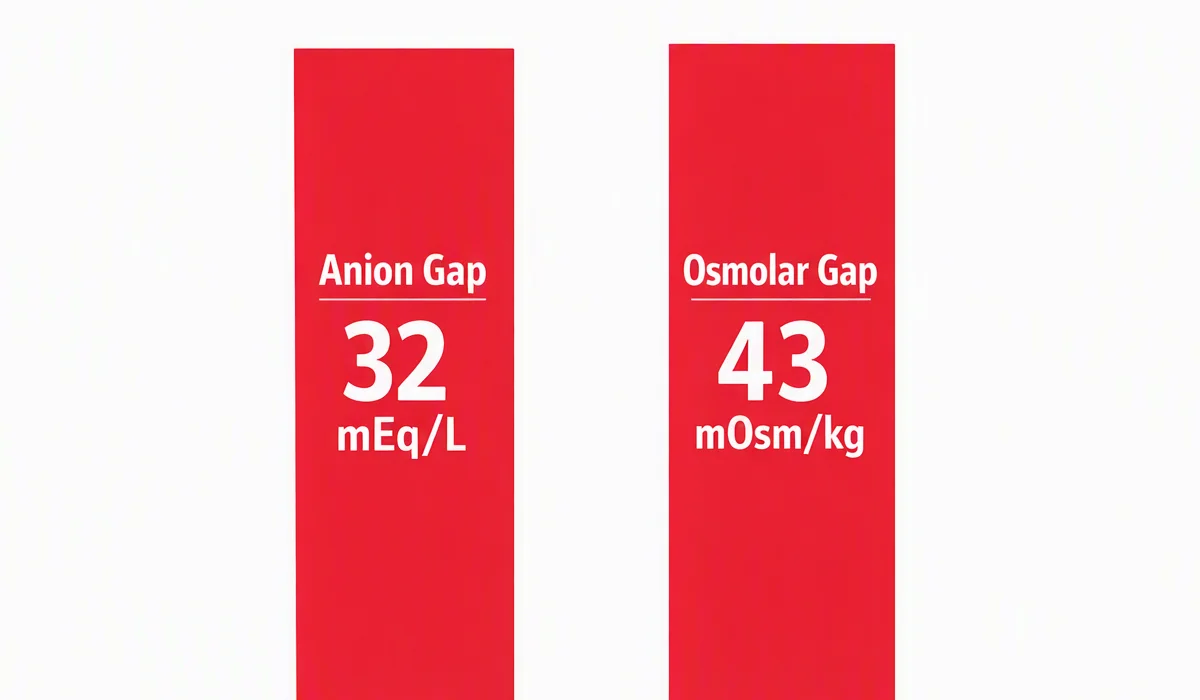
A high anion gap typically points to metabolic acidosis from excess undetected acids in the blood. Typical causes include lactic acidosis, ketoacidosis, kidney failure, and certain poisons. The result should be assessed with the rest of the labs and the patient’s symptoms.
Why is albumin used to correct the anion gap?
Albumin is a important negative-charged protein in blood, so low levels can make the gap look incorrectly low. The corrected anion gap accounts for hypoalbuminemia and gives a more precise view of the patient’s pH status. This refines test interpretation when the chemistry pattern does not fully match the clinical picture.
What conditions can lead to a elevated anion gap metabolic acidosis?
High anion gap metabolic acidosis may result from a number of key conditions, especially lactic acidosis, ketoacidosis, renal failure, and some toxins. These disorders raise unmeasured acids and change the pattern on the electrolyte panel. A full clinical evaluation and often a blood gas help identify the exact cause.